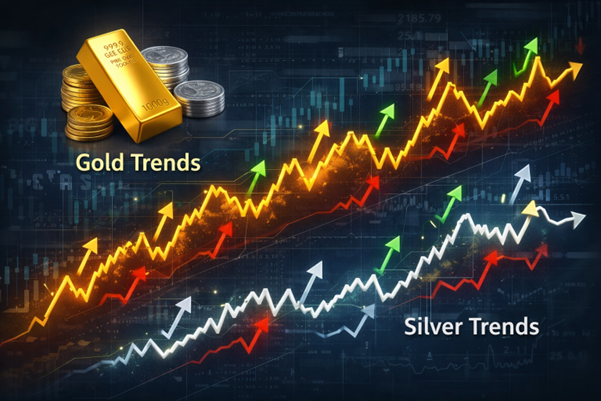
Gold and silver have always held a special place in Indian households. From weddings and festivals to savings and long-term security, these precious metals are more than just commodities for us. But one question often confuses buyers — when is the right time to buy? To answer that, it’s important to understand how gold and silver rate trends work and what really affects them.
This guide breaks it down in simple words, so you can make informed decisions without getting overwhelmed.
Why Gold and Silver Prices Keep Changing?
If you track prices regularly, you’ll notice that gold and silver rates don’t stay the same even for a week. Sometimes they rise sharply, and sometimes they dip unexpectedly. This happens because precious metal prices depend on multiple global and local factors working together.
Gold is seen as a “safe” asset, while silver has both investment and industrial demand. Because of this, silver prices tend to be more volatile than gold. Understanding this difference is the first step toward smarter buying.
Global Factors That Influence Prices
International markets play a huge role in deciding Indian gold and silver prices. Some key global influences include:
- Economic uncertainty: During global crises, inflation fears, or geopolitical tensions, investors move towards gold, pushing prices higher.
- US dollar movement: Gold and silver are traded internationally in dollars. When the dollar weakens, precious metal prices usually rise, and vice versa.
- Interest rates: When interest rates are low, gold becomes more attractive since it doesn’t earn interest but holds value.
These global movements directly affect the gold and silver rates you see in India.
Indian Factors That Matter
Apart from global influences, domestic conditions also impact prices in India.
- Rupee value: A weaker rupee increases the cost of importing gold and silver, leading to higher prices.
- Festival and wedding demand: During festive seasons like Diwali, Akshaya Tritiya, or wedding months, demand rises and prices often firm up.
- Import policies and duties: Changes in government policies can impact short-term price movements.
This is why prices in India may sometimes move differently from global trends.
Seasonal Trends: Is There a Better Time to Buy?
While there’s no perfect formula, certain seasonal patterns are often observed.
Traditionally, prices tend to be relatively calmer during periods of lower demand, such as the monsoon months or between major festivals. On the other hand, rates may increase ahead of festive and wedding seasons due to higher buying interest.
If you’re not buying for immediate use, watching seasonal demand cycles can help you time your purchase better.
Gold vs Silver: Which One Should You Track Closely?
Gold is generally more stable and preferred for long-term value storage. Silver, however, reacts faster to market changes because it’s also used widely in industries like electronics and solar energy.
This means silver prices can rise sharply during economic recovery phases and fall quickly during slowdowns. If you’re tracking the gold and silver rates, remember that silver may offer short-term opportunities, while gold is better suited for steady, long-term holding.
Is It Better to Buy in One Go or Gradually?
Many experienced buyers prefer spreading their purchases over time instead of buying everything at once. This approach reduces the risk of buying at a peak price.
By buying small quantities regularly, you average out the cost. This strategy works especially well when prices are unpredictable or moving sideways.
It also takes the stress out of timing the market perfectly — which, honestly, is very difficult even for experts.
How to Read Price Trends Without Overthinking?
You don’t need to be a market analyst to understand trends. Here are a few simple habits you can follow:
- Track prices weekly instead of daily to avoid panic.
- Compare current prices with 6-month or 1-year averages.
- Look at news related to inflation, global uncertainty, and currency movement.
Over time, you’ll naturally develop a sense of whether prices are relatively high or reasonable.
Emotional Buying vs Smart Buying
Many people buy gold or silver emotionally — during festivals, weddings, or when prices are already high because everyone else is buying. While emotions are understandable, smart buying is about planning.
Ask yourself:
- Am I buying for immediate use or future savings?
- Can I wait for a price correction?
- Am I comfortable with short-term fluctuations?
Being clear about your purpose helps you decide the right time more confidently.
Final Thoughts: There’s No “Perfect” Time
The truth is, there’s no single right or wrong time to buy gold or silver. Prices move based on many factors, most of which are out of our control. What is in your control is staying informed, avoiding panic decisions, and buying with a clear goal.
By understanding gold and silver rate trends, watching global and Indian factors, and spreading your purchases wisely, you can make decisions that feel right — both financially and emotionally.
In the long run, informed buying always matters more than perfect timing.